Jin Xu’s speech@China Global Think Tank Innovation Forum
November 26 , 2025
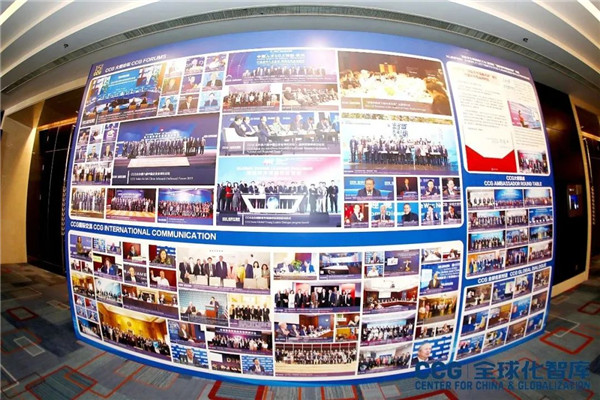
On November 20, 2025, the 10th China Global Think Tank Innovation Forum, hosted by the Center for China and Globalization (CCG) and co-organized by the China Association of International Trade (CAIT), was successfully held in Beijing. We were honored to welcome ambassadors, diplomats, scholars, professionals, fellow members of the think tank community, as well as the distinguished young leaders participating in the Global Young Leaders Dialogue (GYLD) Annual Forum.
This year marks the tenth anniversary of the China Global Think Tank Innovation Forum—an important milestone underscoring the vital role of dialogue and exchange in an era of rapid and profound global transformation.

Jin Xu, President of the China Association of International Trade; Former Deputy Director-General, Department of American and Oceanian Affairs, Ministry of Commerce, delivered the Keynote Speech.
Distinguished guests, ladies and gentlemen,
It is a great honor to be invited to attend the 10th China Global Think Tank Innovation Annual Conference to discuss the topic of “Multilateralism and Global Governance Challenges in Turbulent Times” with outstanding colleagues.
We are living in an era of complexity and uncertainty. The evolution of the century-old changes has accelerated, and global challenges such as geopolitical tensions, weak economic recovery, intensifying climate change, and widening digital divide have emerged one after another. Traditional governance models and multilateral cooperation mechanisms are under severe pressure, and the countercurrents of unilateralism and protectionism have exacerbated the global trust deficit, development deficit and peace deficit. In this context, reviewing the fundamental principles of multilateralism and exploring new practical paths is not only related to the common interests of all countries, but also to the future of human society.
In the face of these challenges, returning to the international system with the United Nations at its core and practicing true multilateralism is the only right choice. This requires us to go beyond the old thinking of zero-sum games and adhere to the concept of global governance of consultation, joint construction and sharing. Chinese leaders have repeatedly emphasized this position at the United Nations and other occasions recently, and put forward the “Global Governance Initiative” aimed at promoting common development, contributing Chinese wisdom and Chinese solutions to improving the global governance system. This is not to overturn and start over, but to enhance the authority, effectiveness and inclusiveness of multilateral institutions through reform and innovation, so that they can better respond to the needs of the times, especially the concerns of developing countries.
The practice of the Belt and Road Initiative is a vivid footnote to the new type of multilateral cooperation. Through consultation, co-construction and sharing, it has transformed planning docking into tangible cooperation projects, promoted infrastructure connectivity, smooth trade and people-to-people ties in countries and regions along the Belt and Road, and provided a strong boost to the implementation of the United Nations 2030 Agenda for Sustainable Development. This fully proves that international cooperation based on the principles of equality, openness and pragmatism can effectively pool resources to meet common challenges.

In this process, think tanks, as the source of ideas and the bridge of policy, shoulder a unique and important mission. We should not only be bystanders or commentators of trends, but also proposers of solutions, builders of consensus and facilitators of communication. Our values lie in:
First, provide forward-looking analysis and policy reserves. We need to deeply analyze the root causes and evolution of global problems, propose actionable governance ideas and innovative solutions, and provide intellectual support for decision-makers based on evidence and beyond short-term interests.
Second, build a platform for frank dialogue and trust enhancement and clarification. Just like this annual meeting, think tanks can create a neutral and rational space, allowing experts from different backgrounds and perspectives to communicate frankly, resolve misunderstandings, narrow differences, and create a good atmosphere for official dialogue.
Third, promote knowledge sharing and capacity building. Especially in the fields of global development, climate change, and public health, think tanks can promote the exchange of best practices, help developing countries enhance their ability to participate in global governance, and promote a more equitable and inclusive governance process.
Dear colleagues, the collision of ideas is the starting point of innovation, and the depth of dialogue determines the height of cooperation. In the face of the daunting challenges of global governance, no country can stand alone, and no institution can dominate the world. We need to pool global wisdom, build a closer “think tank exchange network”, and jointly explore the innovation path of multilateralism.
I look forward to hearing your insights in the following discussions. Let us work together to contribute more constructive think tank strength to effectively respond to global challenges and promote the construction of a community with a shared future for mankind.
Thank you!
Note: The above text is the output of transcribing from an audio recording. It is posted as a reference for the discussion.
Topical News See more